

EXHIBITIONS
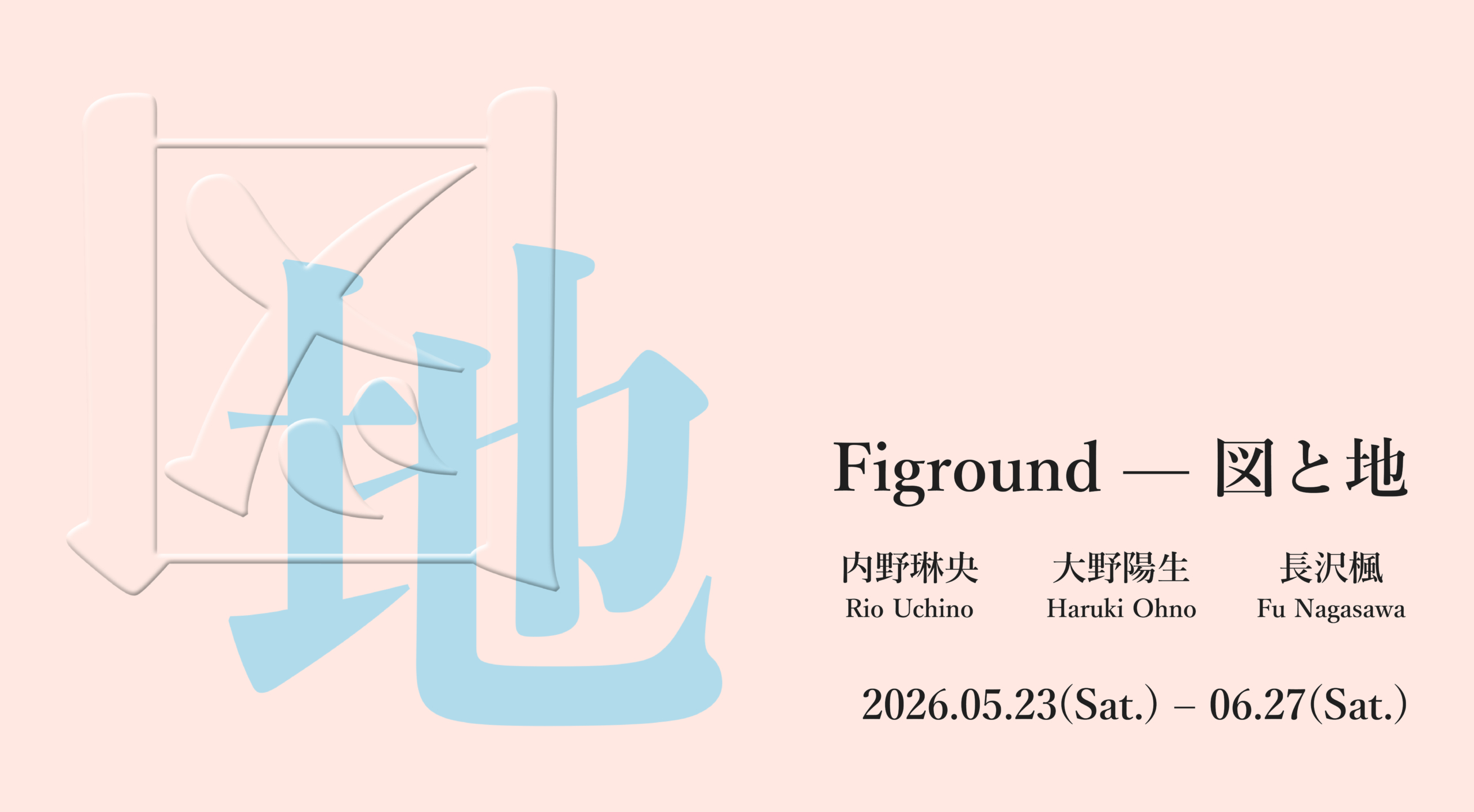
Figround
Tokyo International Gallery presents “Figround,”
a group exhibition by Rio Uchino, Haruki Ohno, and Fu Nagasawa
Tokyo International Gallery (Shinagawa–Tennoz, Tokyo) is pleased to announce, “Figround”, a group exhibition by Rio Uchino, Haruki Ohno, and Fu Nagasawa, on view from Saturday, May 23 to Saturday, June 27, 2026.
When we see paintings and sculptures in a gallery or museum, the works appear as the “figure”, while the walls, the pedestals, and the exhibition space serve as the “ground.” When we consider the relationship between a representation and its medium, it might seem that the former is the “figure”, and the latter “ground.” Similarly, when looking at a painting and considering the relationship between material and support, the former might seem like the “figure”, and the latter “ground.” The “figure” is often regarded as essential, while the “ground” is treated as mere background.
However, is this relationship truly axiomatic?
In the works of the three artists presented in this exhibition, the relationship between “figure” and “ground” is variously intertwined — sometimes disturbed, sometimes obscured.
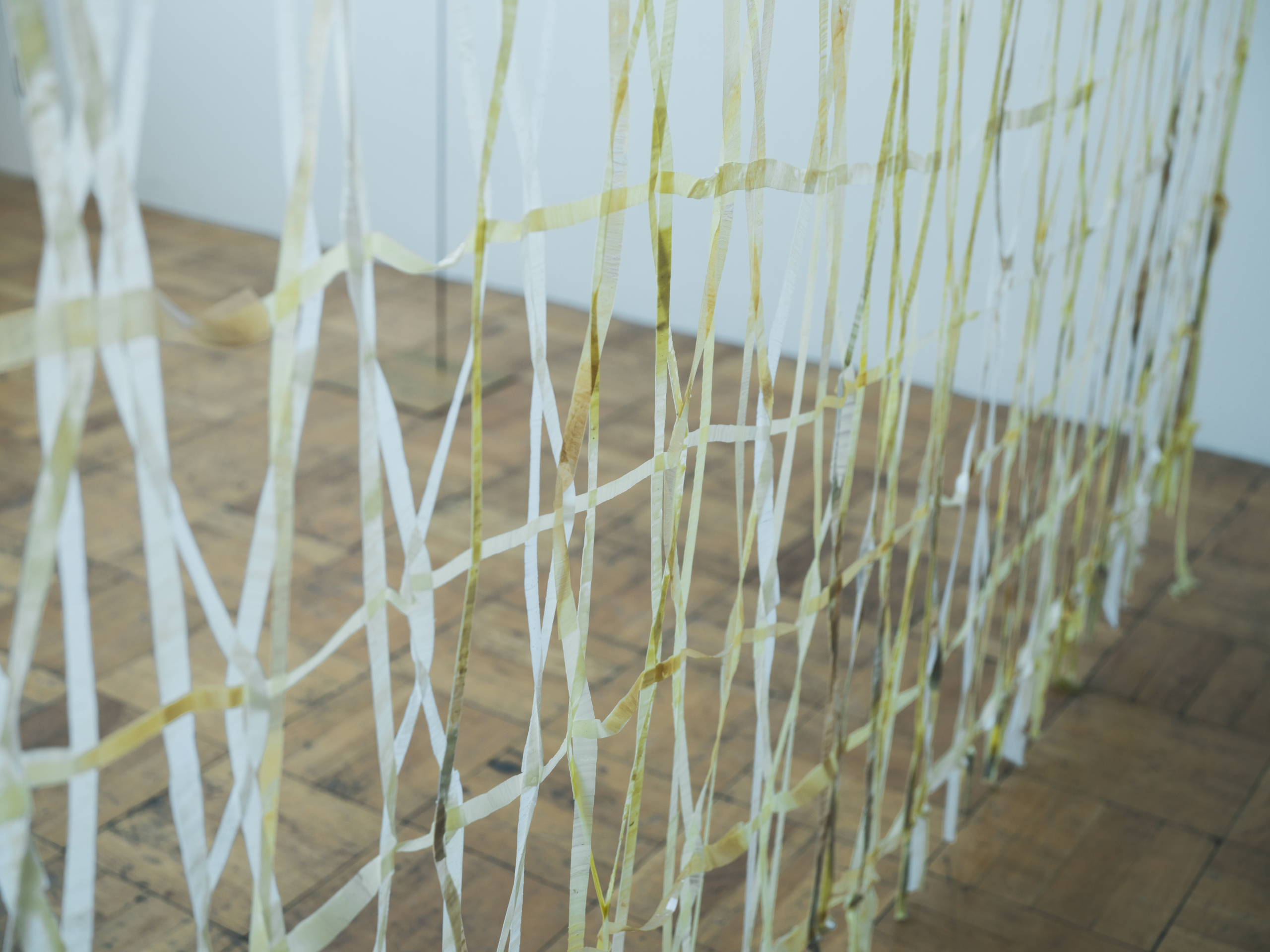
Rio Uchino creates “paintings” made from woven oil paint that has been dried and formed into strings, as well as works composed of a paper frame. Here, paint forms an image entirely on its own, without any canvas, and paper — traditionally regarded as support in paintings — serves as a framing device, deconstructing the conventional relationships among material, support, and exhibition equipment.
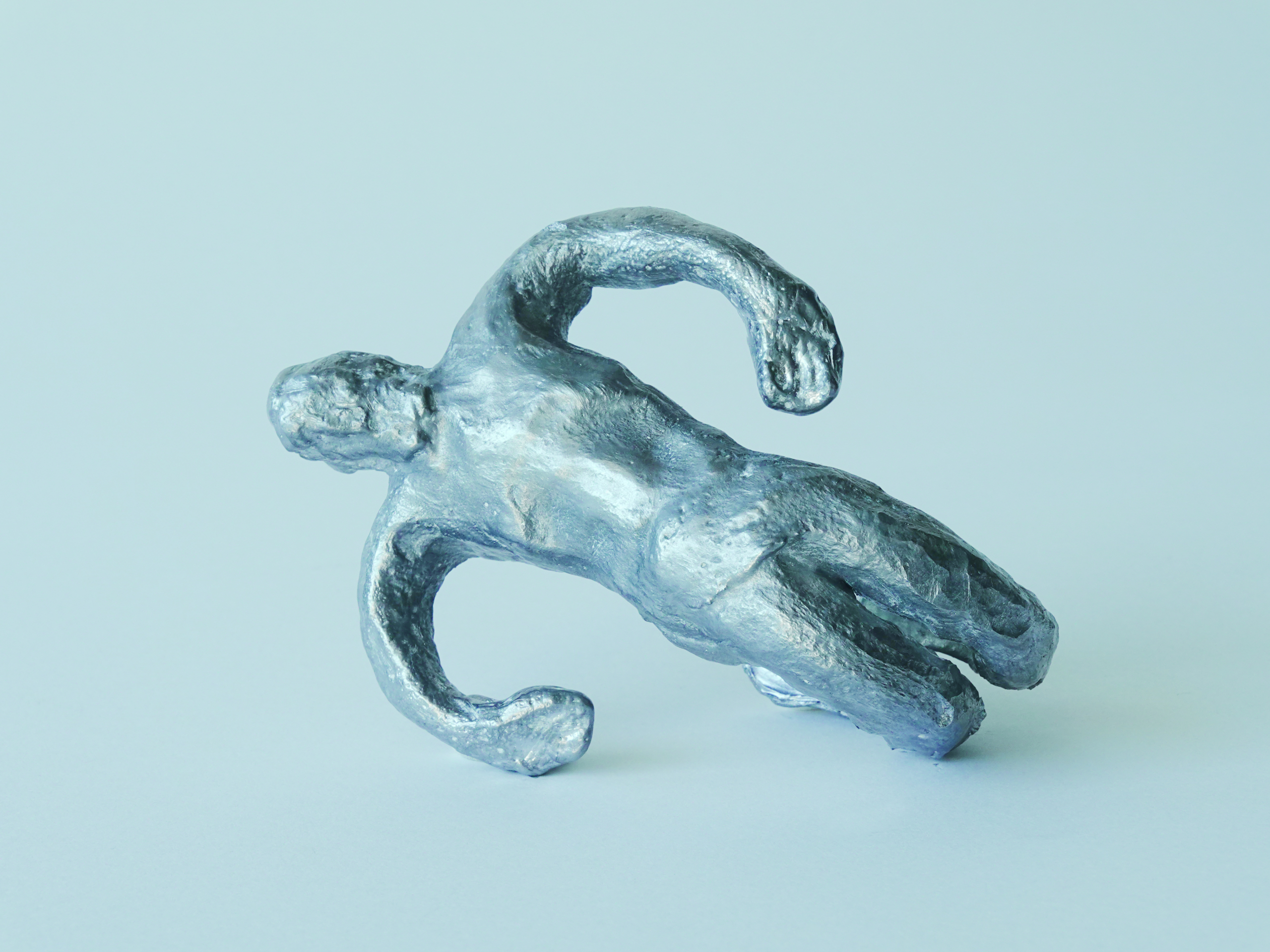
The sculptures of Haruki Ohno are inspired by religious art forms. They evoke objects of personal prayer kept close to their owner — and sometimes carried by them — rather than those installed in grand churches or cathedrals. In these works, the “ground” or the environment in which they are situated bleeds into the choice of materials and the act of making itself.
Fu Nagasawa paints motifs of animals and plants drawn from mingei-hin (folk crafts) onto canvas, using oil painting and woodblock printing. In the Western art tradition, images on canvas have always been regarded as the central part of expression. By migrating these images from their original “grounds” — ceramics or textiles — to canvas, the works invite us to reconsider the boundary between “decoration” and “representation.”
Through works that consciously deploy and seek alternative forms to elements such as material, support, and exhibition equipment and space, this exhibition explores what—in material, spatial, and institutional terms—enables a “work of art” to exist as we stand before it.
.png)
ARTIST PROFILE
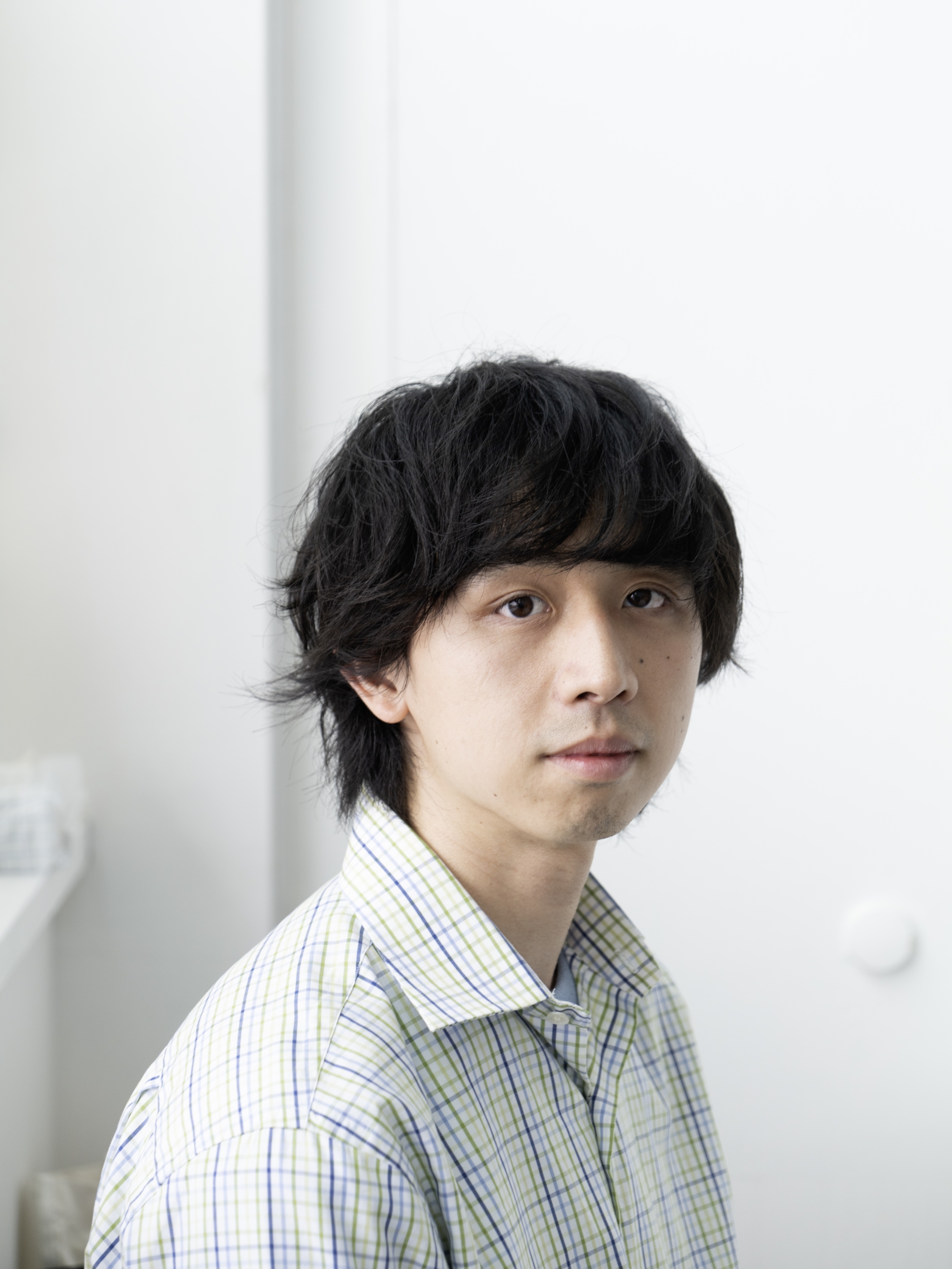
Rio Uchino
Born in Tokyo, in 2000. He completed his Master’s Program at the 6th Laboratory of Oil Painting, Department of Painting, Graduate School of Fine Arts, Tokyo University of the Arts in 2026. His main exhibition includes “from the ROOM” (MJK Gallery, Tokyo, 2024), “Pithecanthropus: Project by the 6th Laboratory Oil-Painting Department of Tokyo University of the Arts” (MITSUKOSHI CONTEMPORARY GALLERY, Tokyo, 2025).
Artist Statement
The act of “hanging a painting in the sky” is situated just outside two pictorial traditions concerning distance and height.
It is less an act of painting than an attempt to temporarily entrust an image — one that has lost its support — to the space between the gaze and gravity.
In Western painting, where there is a convention of representing distance as height, a horse receding into the background is simply placed a few centimeters higher on the canvas.
The farther an object is, the higher it is pushed on the picture plane; as depth is lifted into the vertical axis, the sky has functioned as a device for converting distance.
There, the gaze penetrates from front to back, and space is measured, organized, and grasped.
Eastern painting, by contrast, offers a different kind of depth — one that fragments the composition through scattered-point perspective or a bird’s-eye view.
For example, by incorporating clouds, mountains appear to rise, and the relationship between foreground and background becomes one of “sliding and layering” rather than “rising.”
Here, distance is not translated into height; instead, height is folded like a fusuma screen that compresses distance within itself.
The act of “hanging a painting in the sky” resist absorption into either of these spatial treatments. It uses the sky neither as a device for converting distance nor as a field for folding layers; instead, it is an attempt to hold the image, suspended between the body and the gaze.
Here, the sky is no longer the subject to be painted.
Woven and reconstructed, the painting is given a place to exist in space without being fixed to a wall. Paint generates differences in tension and density, and the image neither stands on its own nor touches the ground.
It is perceived as weight and density, yet it refuses to settle into spatial coordinates — up or down, front or back, supported or unsupported.
What wavers is not the image itself, but the room that contains it.
This condition arises quietly, as the very terms on which a painting can exist.
Height is not a measurable quantity, but the interval that comes into being so that an image may be hung; distance is not depth, but the invisible tension stretched between the body and the image.
Perhaps this state is the minimum form of the act of “hanging a painting in the sky.”
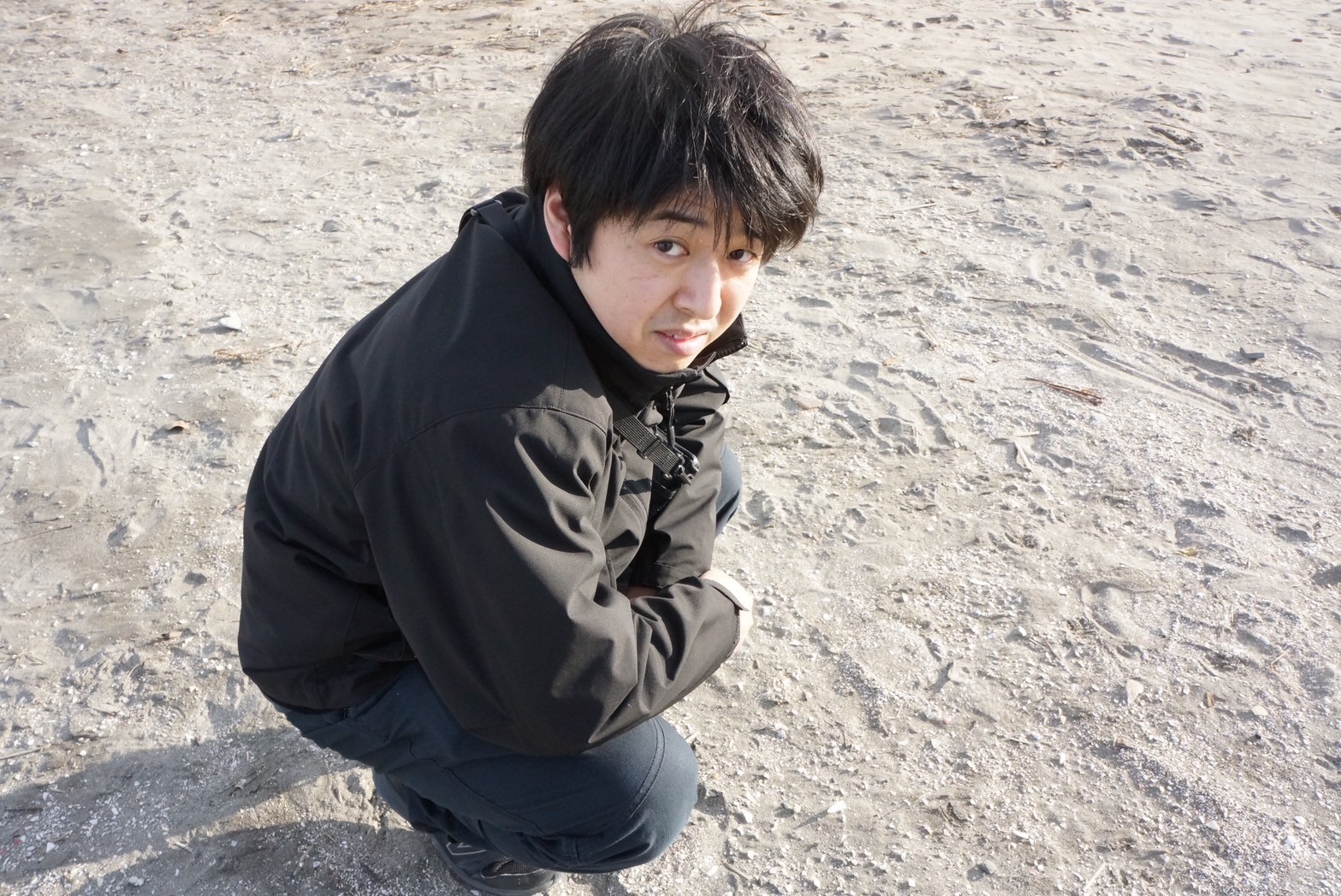
Haruki Ohno
Born in Saitama, in 1992. He completed his Master’s Program at the Sculpture Course, Fine Arts Course, Musashino Art University in 2017. His main solo exhibition includes “Serve” (Fujimidai Tunnel, Tokyo, 2023), “Masonry” (WALLA, Tokyo, 2022).
Artist Statement
I have been creating work with the intention of archiving, in sculptural form, something like the “faith” I have cultivated day by day living in Japan — a country where religious events and customs of all kinds intermingle.
The act of making and presenting something in the society feels continuous with other acts that nourish a certain spirituality and curiosity: visiting shrines and temples, seeking good fortune through images of treasure ships or auspicious symbols, tending graves, or enjoying fortune-telling and spiritual entertainment.
My motifs range without fixed consistency — from things associated with “water” in folklore, to human figures, insects, and still-life objects like tableware, — yet I hope that, gathered in the same space, they bear witness to my own small, personal faith.
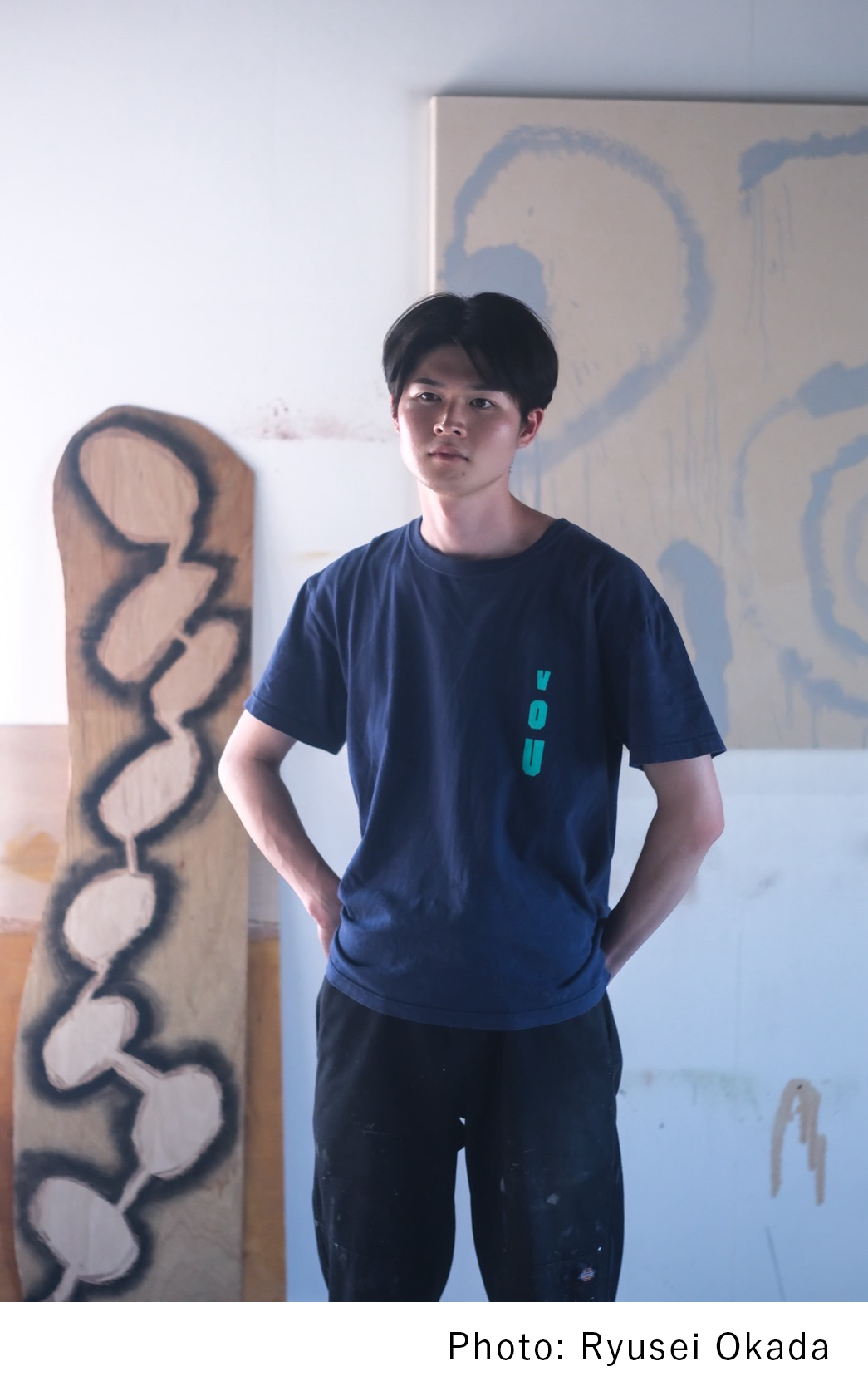
Fu Nagasawa
Born in Kochi, in 1999. Currently based in Kyoto. He graduated from the Department of Painting, College of Art and Design, Musashino Art University in 2022, and completed his Master’s Program at the Oil Painting Program, Arts Major, Graduate School of Kyoto University of the Arts in 2025. His main exhibition includes “★(Book Mark)” (COHJU, Kyoto, 2026), and “Zankyu” (Taka Ishii Gallery Maebashi, 2026).
Artist Statement
Drawing on images rooted in everyday life — painted plates, fusuma screen paintings, and folk paintings discovered on my walks — I reflect on painting in the East. Images painted on everyday objects carry respective functions and roles grounded in daily life: decoration, wishes, and prayers. Through such images, we interpret feelings and desires directed toward those close to us, translating them into something personally felt.
OVERVIEW
- TITLE
- Figround
- DATE
- May 23 (Sat) – June 27 (Sat), 2026
- Opening Hours
- 12:00 – 18:00
- CLOSED
- Sundays, Mondays and Holidays (Tuesdays by appointment)
- By Reservation Only
- Tuesday 12:00-18:00 (1-hour slots)
【Reservation Form】 https://b-book.run/@tig0e37257563b82de3
* Please make a reservation at least three days in advance via the link.
* Reservations are required not only for exhibition viewing but also for artwork purchases and media inquiries.
* Please note that we may not always be able to accommodate all reservation requests. - Opening Reception
Date : Saturday, May 23, 2026, 16:00–19:00 (No reservation)
Venue : Tokyo International Gallery- VENUE
- Tokyo International Gallery
- ADDRESS
Tokyo International Gallery
TERRADA ART COMPLEX II 2F,1-32-8 Higashi-Shinagawa, Shinagawa-ku, Tokyo, Japan